

 Asset Protection
What Surfaces Can Dry Rot Affect – And How Is Each At Risk
 Adam Wearing
 ⏱ 12 min read
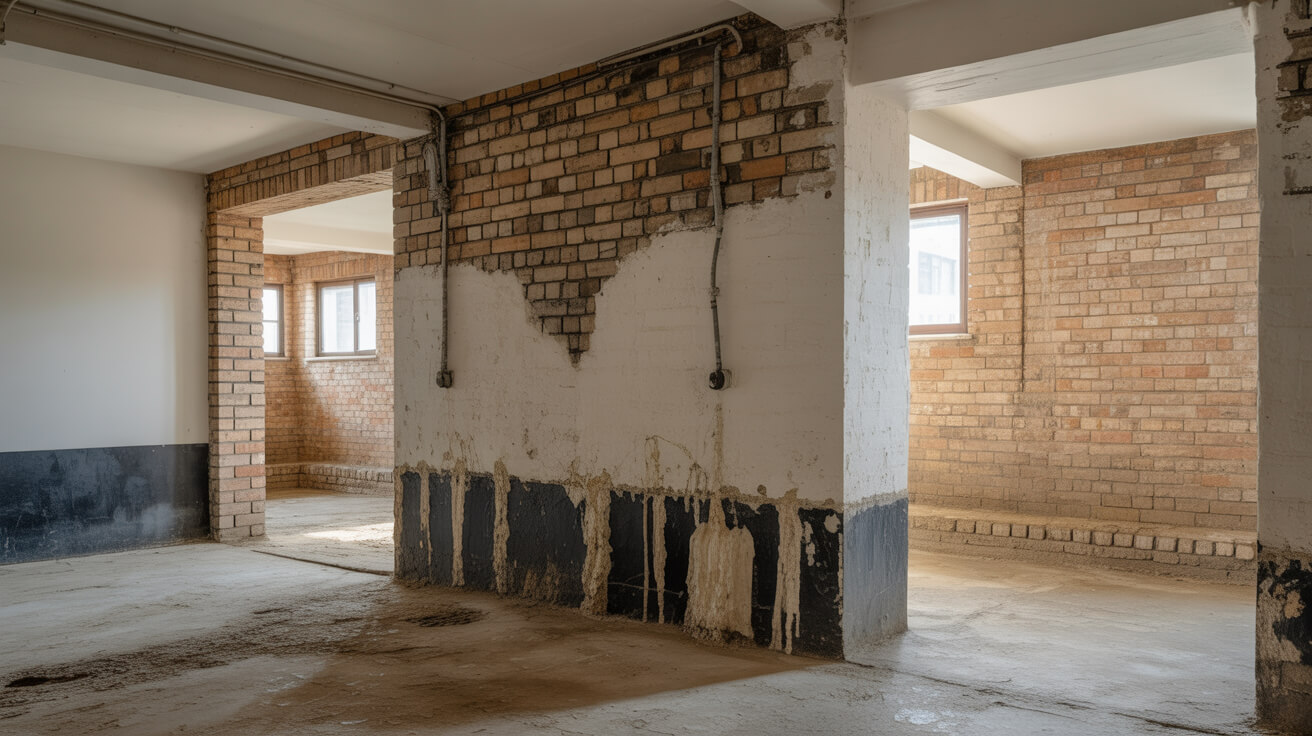
What Surfaces Are Most at Risk from Dry Rot—and How Does Each Take the Hit?
Dry rot doesn’t ask permission, no matter how flawless your latest refurb looks or how many compliance forms you’ve ticked. This fungal threat (Serpula lacrymans) flies under the radar, exploiting every crack—from heritage timber beams to hidden plywood in new builds, right through to underlays, furniture, and wall linings. If you manage property in the UK—whether you’re a homeowner, landlord, letting agent, surveyor, builder, or asset manager—here’s the question that matters: Have you really checked every surface, or just assumed the problem will show itself?
It’s usually the surface you ignore that becomes tomorrow’s financial headache.
Every year, insurance providers flag more claims denied for missed soft surfaces. Councils escalate formal actions against landlords and letting agents who miss joinery or floors. Lenders and surveyors will delay your sale or mortgage until they see proper inspection logs, not best-guesses on visible timbers. The stakes are real: property value, saleability, insurance eligibility, penalty risk. Surrey Damp Experts have made full-surface, forensic audit the benchmark—raising the compliance bar and defending your asset value.
This guide is your surface-by-surface playbook:
- What’s vulnerable and why?
- How does dry rot strike each material and zone?
- What gets missed most often, and who pays for it?
- How do you cover every base—proving to insurers, buyers, tenants, and enforcement bodies that your asset is bulletproof?
There’s no room for luck in modern property control. What comes next is clarity, proof, and a straight-up advantage for the owner willing to go deeper than the usual box-tick.
Which Timber Structures and Joinery Are Targeted First by Dry Rot?

The number-one error is assuming dry rot hits “old buildings.” In reality, this fungus savages both ancient beams and modern, factory-finished timber, including so-called “treated” woods that become defenceless when damp or humidity spikes after a leak, flood, or build-up from failed ventilation. It targets wherever moisture lingers, especially:
| Timber Zone | Relative Risk | Best Inspection Move |
|---|---|---|
| Floor joists, boards | Extreme | Core sampling, IR/thermal scan |
| Skirting, architraves | High | Visual probe, moisture test |
| Ceiling/roof timbers | Severe | Exposure probe, humidity logging |
| Stairs & bannisters | Moderate–High | End-joint scrutiny, tap test |
| Decorative panelling | Severe (esp. if hidden) | Endoscope, photo record |
What puts these at risk?
- Poor ventilation or airflow, especially where timbers meet damp masonry, traps latent moisture.
- Modern composite wood (MDF, chipboard): While suppliers tout “treatment,” real-world cut-ends and fixings invite invisible attack, letting fungus cross between “old” and “new.”
- Tightly fixed stairs or panelling often conceal early signs, giving dry rot a hidden runway.
- Even “upgraded” timbers deteriorate fast if installation work traps damp—a risk that’s magnified in conversion flats, heritage refurbs, or dense new builds.
Owners who skip behind-the-scenes timber checks end up shouldering repair costs that can soar above structural replacement. Insurers are increasingly refusing claims where forensic, surface-by-surface documentation is missing—especially for subfloors and junctions with wet walls (BS6576:2017 covers the mandatory scope for these logs).
Direct Response: When it comes to timber, assume nothing. Scan, map, and log every joint—visible or not. The difference between a simple patch fix and an asset-threatening rot event is all about whether you insist on complete, audited inspection every year, after every plumbing issue, or before every sale or let.
Why Are Carpets, Fabrics, and Soft Furnishings Overlooked but Highly Exposed?

Most agents, DIYers, or even pro managers assume dry rot can’t threaten carpets or soft surfaces—especially if they’re synthetic or “clean.” Not so. Up to 40% of landlord and letting claims flagged by local authorities now start with uninspected carpets or underlay, particularly in damp-prone or high-humidity flats (NHBC, 2023). Remember, even synthetic carpets gather organic dust and hold moisture—perfect for spore take-off.
| Surface | Early Red Flag | Inspection Strategy |
|---|---|---|
| Wool carpet | Streaks, (musty) odour | Corner probe, swab, photo |
| Underlay | Brittle, powdery, spongy | Full lift, rapid swap |
| Upholstery | Discoloured “soft” spots | Swab, tap, isolate |
Why the spike in risks?
- Underlays and carpets trap spills, leaks, and condensation—especially where beds or wardrobes block drying.
- Landlords and agents often ignore under-bed/carpet zones, allowing fungi to flourish unchecked.
- Even “invisible” soft surface decay can void insurance if it was the bridge to more visible (or costly) damage.
PCA and HHSRS set new standards: every fit-for-habitation inspection, sale, or let now expects humidity logs and photos for every soft surface in risk zones (bathrooms, kitchens, external walls, cold rooms). Insurers, buyers, tenants, and even councils can—and will—request these logs when claims, disputes, or property sales come up.
Proof of regular ‘soft surface’ checks is what keeps insurers, agents, and councils on your side.
How Surrey Damp Experts do it differently: detailed moisture mapping, photo logs, and rapid sign-off after each event—turning what used to be an overlooked “risk gap” into a solid proof advantage for clients at every stage.

Layered walls, dry linings, dot-and-dab, and insulation retrofits do what they promise for warmth and EPC—but also unlock a hidden superhighway for dry rot to bypass outward symptoms. Fungal hyphae travel along adhesives, insulation boards, ties, and cavities, attacking everything from behind.
| Wall or Layer | Concealed Attack Path | How Pros Catch It |
|---|---|---|
| Plaster + paint | Sub-surface mycelium | Endoscope, mapping, moisture probe |
| Plasterboard/drywall | Along ties, gaps, voids | IR scan, detailed probe |
| Insulation panels/systems | Damp at cold bridges | Thermal scan, spot test |
The risk: While insulation and cavity walls reduce visible condensation, they can also trap moisture—especially after leaks, floods, or retrofits. Many property sales have stalled because a “dry” wall hid decayed timber or lining inside a sealed cavity, revealed only through advanced scanning or at demolition.
PAS2035 and BS8102 require mapped checks and verifiable images for every void, cavity, or wall-system element after insulation, refitting, or repairs—and again after any water event. Local authorities and warranty providers demand this for any claim, sale, or dispute.
If your last contractor missed cavity/lining checks, or if you lack timestamped images for recent insulation upgrades, expect extra scrutiny from buyers, agents, or insurers. Every void unchecked is a red flag when someone requests proof your property is “dry rot clear.”
Key Point: Without mapped audits and documented wall checks, you’re gambling with both compliance and resale value. The only win: make it standard practice.

Fitted units—bespoke wardrobes, kitchen cabinets, hard-fixed shelving—often become both the first and last places dry rot gets a foothold, thanks to blocked airflow and forgotten joinery at walls or floors. The insurance industry now recognises these “blind spots” as a root cause in an increasing number of claims and disputes.
What ups the risk?
- Vintage and bespoke units fixed in basements, attics, or externally-facing walls see repeated temperature/moisture swings, often without proper “breathability” or clearance.
- Kitchens and bathrooms: Cabinets fitted tight against leaks or utility service entries catch and seal in excess damp from everyday use or small plumbing issues.
- Shelving, wardrobes, and panelling attached directly to cold walls box in problem areas, making early rot symptoms easy to overlook but difficult and costly to correct later.
With the Housing Act 2004 and Landlord and Tenant Act laying down clearer evidence duties, missing logs or poorly documented joinery inspections can torpedo insurance claims, warranty arguments, or sale/letting certifications. Fit-out investment loses its value overnight if decay is found or suspected after the fact.
Surrey Damp Experts systematically photo-log and moisture scan all fitted and bespoke joinery, linking every item to the mapped room and surface status—creating proof-ready records that stop buyer, tenant, or surveyor disputes dead in their tracks.
Are Insulation Layers, Underfloor Systems, and Green Upgrades Concealed Breeding Grounds for Dry Rot?

Sustainability upgrades—like new insulation, hybrid underlays, reclaimed fibre boards—have become both marketing points and hidden hazards. Why? Layered and natural materials absorb and trap moisture, often in areas where air flow and drying are restricted. Without post-fit testing and scheduled rechecks, these spaces can harbour fast-moving decay for months or years before symptoms break out.
| Upgrade/Layer | Typical Risk | Pro Inspection Step |
|---|---|---|
| Cellulose/wool insulation | Moisture hold, slow dry-down | Humidity log, sample, probe |
| PIR/foam boards | Condensation at cold bridges | IR scan, probe, edge testing |
| Hybrid underlays | Damp trap below flooring | Full lift, moisture test, scheduled checks |
Even with grant-backed work or reputable “green” products, UK lending and insurance bodies now demand records showing every insulation/underfloor product is dry, mapped, and digitally logged post-fit and at every inspection. Fail to provide—and any future cover or mortgage line can be flagged or denied.
New-build? Retrofit? The risk is higher if ventilation or barrier planning was skipped. Surrey Damp Experts go layer by layer, providing vendors, buyers, managers, or housing officers with portable, court-ready compliance logs on every insulation package, underfloor, and upgrade—protecting investment and access to every compliance certificate required.
What’s the Modern Process for Detecting, Documenting, and Managing Dry Rot Across Surfaces?

Here’s where intentions and routines beat one-off “fixes.” Modern standards and market realities demand a systemic approach:
| Area/Surface | Early-Risk Symptom | Inspection & Logging Must-Do |
|---|---|---|
| Floor timbers/joists | Springy, soft, or bounce notes | Core probe, IR scan, humidity log |
| Carpets/underlays | Odd smell, brittle/soft patches | Full lift, swab, photographic record |
| Walls/cavity lining | Localised cold, staining | IR camera, sample cut, digital mapping |
| Insulation/underlay | Sticky, cold, slow to dry | Probe, humidity monitor, visual log |
| Fitted furniture | Raised veneer, patchiness | Spot moisture test, image record |
Modern process essentials:
- Surface-by-surface, zone-by-zone: No surface is exempt—scan, check, and document all, at least annually, or after any water event.
- Digital, photo, timestamped logging: For every inspection or treatment, capture and log image records (noting dates, inspector, zone).
- Proof of status, pre/post event: Sales, lets, or insurance claims hinge on what your logs show _at the time_ of signing, not what you “knew” later.
- Remedial work proof: Certificate, timestamp, and photo every fix—this alone can save or secure 5-figure claims or valuations.
The owner with the best inspection logs always wins the argument—every time.
Surrey Damp Experts enable this through survey-grade mapping, multi-format digital reporting, and status logs tailored for every inspection or remediation event—raising asset status and resale protection above the local average.
Why Does Modern Compliance and Legal Duty Demand Surface-by-Surface Dry Rot Evidence?
The legal context has moved beyond generic “duty of care.” Now, it’s explicit: housing regulations, standards, and insurance contracts require proof—on every surface and fitment, renewed at every major milestone.
Key regulatory drivers:
- Housing Act 2004/HHSRS: Fit-for-use means “free of hazard” everywhere—incl. all floors, linings, joinery, fixtures.
- Fitness for Habitation Act 2018: Tenants can demand logs, not loose verbal assurance, about everything from floorboards to soft furnishings.
- BS6576, BS8102, Building Regs Part C: Moisture status, not anecdote, is now the standard; image logs and mapped scans required for every major change, retrofit, or post-leak repair.
| Compliance Evidence Expected | Practical Form Required | Stakeholder Requirement |
|---|---|---|
| Inspection logs (timed/image) | Digital, portable | Insurer, lender, local authority |
| Remedial works record | Signed/photo, timestamped | Solicitor, buyer, claims provider |
| On-going moisture logs | Traceable sensor/scan log | Warranty, insurance, legal dispute |
Lack credible logs? Expect claims to fail, lettings to get blocked, and sales to hit avoidable delays or price chips. Everything “easy to skip” is now the first thing verified by claims teams, conveyancers, or local authority enforcement.
Surrey Damp Experts provide not just treatment, but a portable status and audit record for every zone—de-risking transactions and raising asset status above the noise.
Protect Every Zone—Book a Surrey Damp Experts Full-Surface Dry Rot Audit Today
Every unchecked surface—timber, underlay, wall, furniture, insulation—is a potential starting point for dry rot, financial risk, or compliance loss. Defending your property, investment, or reputation is now as much about log discipline as treatment skill.
Arm your assets with court-grade, timestamped logs and maps—raising your status with lenders, buyers, insurers, and enforcement officers alike. Surrey Damp Experts deliver what the market now expects: audit-ready, survey-grade inspection, court-level documentation, and long-term records linked to every property zone, layer, and fit-out.
Smart owners defend their assets surface by surface. The market always takes note.
Your chance to future-proof value and reputation starts now. Book your Surrey Damp Experts full-surface audit—because in property risk, details, discipline, and evidence always win.
Frequently Asked Questions
What Hidden Mechanisms Let Dry Rot Invade Surfaces Most Owners Never Suspect?
Dry rot’s secret weapon is its ability to exploit almost any overlooked or dampened layer, well beyond classic timber. Serpula lacrymans doesn’t care about your building checklists—it latches onto neglected subfloors, forgotten wallpaper seams, under-carpet dust, and even residual debris behind panels or in insulation voids. If an area stays moist and organic-rich—thanks to a minor leak, slow condensation, or even high summer humidity—it’s all invitation. Most major outbreaks began miles from the nearest visible wooden joist, sometimes travelling across dust-bound underlays and old adhesive before you spot a trace.
“The most expensive dry rot outbreaks always start where nobody thinks to look: in forgotten, damped-out layers well outside the usual timber suspects.”
Property upgrades unintentionally raise your risk; each additional layer—cavity insulation, dry-lining, or intricate floor build-ups—expands rot’s highway network. In heritage and retrofit properties, even breathable lime or clay finishes can feed migrating fungus if moisture sneaks through. Surrey Damp Experts doesn’t wait for visible timber decay; we use forensic moisture mapping and cavity probes to reveal exactly where the silent threads are weaving—so you keep your renovation and your asset intact.
Why “Layered” Builds Need Extra Vigilance
- Modern dry-lining/dot-and-dab: Hidden moisture means fast migration behind boards.
- Carpet and fabric underlays: Organic dust becomes a fungus’s road.
- Legacy wallpapers and glues: High cellulose, high speed for fungal transfer.
Annual moisture audits and digital records aren’t a sales pitch; they’re basic defence against a six-figure repair scenario.
Which Specific “Non-Timber” Materials Are Most at Risk for Dry Rot Transfer and Why?
Dry rot doesn’t check material labels. While dense stone, ceramics, and new plastics resist decay, anything that soaks up and holds moisture—especially fibrous or dust-laden—opens the door. Chipboard, MDF, classic softwoods, fibre-rich carpets, legacy wallpaper, and untreated plywood are prime targets. Even “safe” materials like PIR/EPS foam boards or synthetic underlays become high-risk if they pick up dust, tiny leaks, or minor adhesive residues.
Case studies published in the Journal of Property Maintenance (2023) document outbreaks in high-end conversions, where new eco insulation became a fungus bridge simply because of builder’s dust and leftover scraps. One recurring pattern: post-flood or leak, owners replace only the visible timber or carpet—missing the contaminated underlay, where fungus silently rides to neighbouring rooms.
“Rot never targets just one material—it’s the overlooked junctions and edges, loaded with moisture and dust, that decide your building’s fate.”
Table: Material Risk and Inspection Priority
| Surface Type | Decay Risk | Owner Action |
|---|---|---|
| Softwood/MDF/Chipboard | Highest | Check for hidden moisture |
| Carpet Underlay/Wool/Jute | High | Remove post-leak, post-flood |
| Dot-and-dab Plasterboard | Moderate | Inspect with cavity cams |
| PIR/EPS (foam insulation) | Low (if pristine) | Monitor for dust/damp edges |
| Metal/Plastic/Tile | Negligible | Only watch for bridging |
The minor “dust highway” is now most surveyors’ first suspect in unexplained spread.
How Can Property Owners Spot Dry Rot Activity Before Timber Damage Appears?
Waiting for timber rot is like waiting for a flood before fixing your roof—too late, too expensive. Early dry rot signals hide in areas people skip:
- Off-smells: A stubborn earthy or mushroom note, even in hygienic rooms, often marks unseen colonies.
- Carpet tackiness or softness: A patch that feels different underfoot, or that has a strange, brittle crunch.
- Wallpaper or baseboard “ghost” marks: Brown, yellow, or ashen lines radiating from bathroom edges, kitchen pipes, or external walls.
- Unexplained allergy surges: Sneezing or coughing out of context can be traced to increased airborne spores from nascent colonies.
- Vinyl or carpets that pull away at corners or from cold wall junctions: Subtle warping or puckering can mean fungal activity beneath.
- Faint white thread or dust filaments at joints: Direct evidence of fungal growth before true decay kicks in.
“Treat every persistent off-smell, odd patch, or allergy as a lead—your body and your building know something’s wrong before you do.”
Surrey Damp Experts zeroes in on these cues using instrumented surface mapping, airborne spore sampling, and layered cavity scanning, so action is possible before true economic damage or resale loss occurs.
Why Do Modern Property Layers Create Blind Spots That Sabotage Even Major Dry Rot Treatments?
Modern construction prides itself on efficiency, but every sandwich of boards, insulated voids, or multi-material partition unintentionally breeds perfect dry rot havens—away from everyday scrutiny. Leaks behind boxed-in pipes, slow roof ingress into attic insulation, or sweating airbricks in basements offer fungus safe passage. Old repairs, DIY tanking, or partial upgrades almost always skip secondary layers or voids, leaving unmonitored pathways.
Crucially, lenders and insurers notice: BS 6576–compliant audits now note that “uninspected cavities and layered build-ups remain the principal cause of recurrence or missed risk” (UK Building Research Establishment, 2023). The consequences—delayed mortgages, blocked insurance claims, legal challenge—follow those paperwork gaps.
“A patch-and-paint job solves nothing if fungus is still feasting behind the upgrades.”
Professional audits from Surrey Damp Experts cut through build layers and documentation gaps, mapping every cavity, interface, and transitional zone. Our digital logs replace guesswork with validation for every surveyor and compliance officer down the chain.
Checklist: High-Risk Modern Construction Voids
- Behind kitchen, bathroom, and utility room service boxing
- Within double or raised floors, under heavy installations
- At interfaces where old timber meets new insulation or dry-lining
- Any cavity that’s been “sealed” post-repair but lacks a mapped, photographed record
If the last audit skipped any of these, real protection isn’t yet on the table.
What Preventable Mistakes Let Dry Rot Reappear After a “Full” Treatment—and How Do You Guarantee Permanent Results?
Dry rot is patient, not picky—it lies dormant anywhere you skip. The classic fail cycle? Treat the visible room, but leave infected debris, dust, or organic material hiding beneath carpets, within wall cavities, or at board edges. Fungus thrives in these invisible reserves, waiting for a moisture spike or temperature swing to reactivate.
Regulatory shift is catching up: UK Finance now pushes for property-wide, redundant inspection logs after treatment (2024). Lack of comprehensive proof is now the single fastest-growing reason for insurance, resale, or remortgage delays in affected postcodes, according to claims data from Property Compliance UK (2023).
“The only way to permanently starve dry rot is to target every surface, log every inspected layer, and keep proof ready for your next lender or buyer.”
Surrey Damp Experts eliminates the return risk by tagging each checked layer, photographing interfaces, and archiving digital logs for instant retrieval—outpacing most market competitors still stuck on paper PDFs.
How Does Failing to Log Every Surface’s Status Withstand the Latest Mortgage, Insurance, and Legal Demands?
Financial and regulatory realities have shifted—no relief exists for patchwork fixes or undocumented “visual only” checks. UK mortgage lenders increasingly demand digital records showing every susceptible layer and void has been audited or remediated. Policy language among major UK insurers was updated in 2023 to require “comprehensive, externally verifiable dry rot clearance” for all zones before claim approval.
Landlords and agents face more frequent HHSRS-mandated audits—covering insulation, wall systems, and every damp-prone layer, not just the showpiece wood. For heritage and conservation property, planning boards force mapped, non-invasive checks, putting the burden of proof on owners for every upgrade or repair undertaken. Commercial property owners and facilities managers can lose “all risks” coverage with a single missed log—fines and voided coverage add up far faster than the repair bill ever could.
“In a compliance-first market, your property’s future is defined by the audit trail—every unlogged zone is a liability, not an asset.”
Surrey Damp Experts delivers all-surface digital audits, which plug seamlessly into mortgage applications, insurance claims, and compliance schedules. This is your reputation, your liquidity, and your asset protected by real documentation—not hope.
Safeguard your property’s future, compliance, and marketability by booking a full-surface, digital dry rot audit with Surrey Damp Experts. When every layer counts, don’t let a single one leave you exposed.


